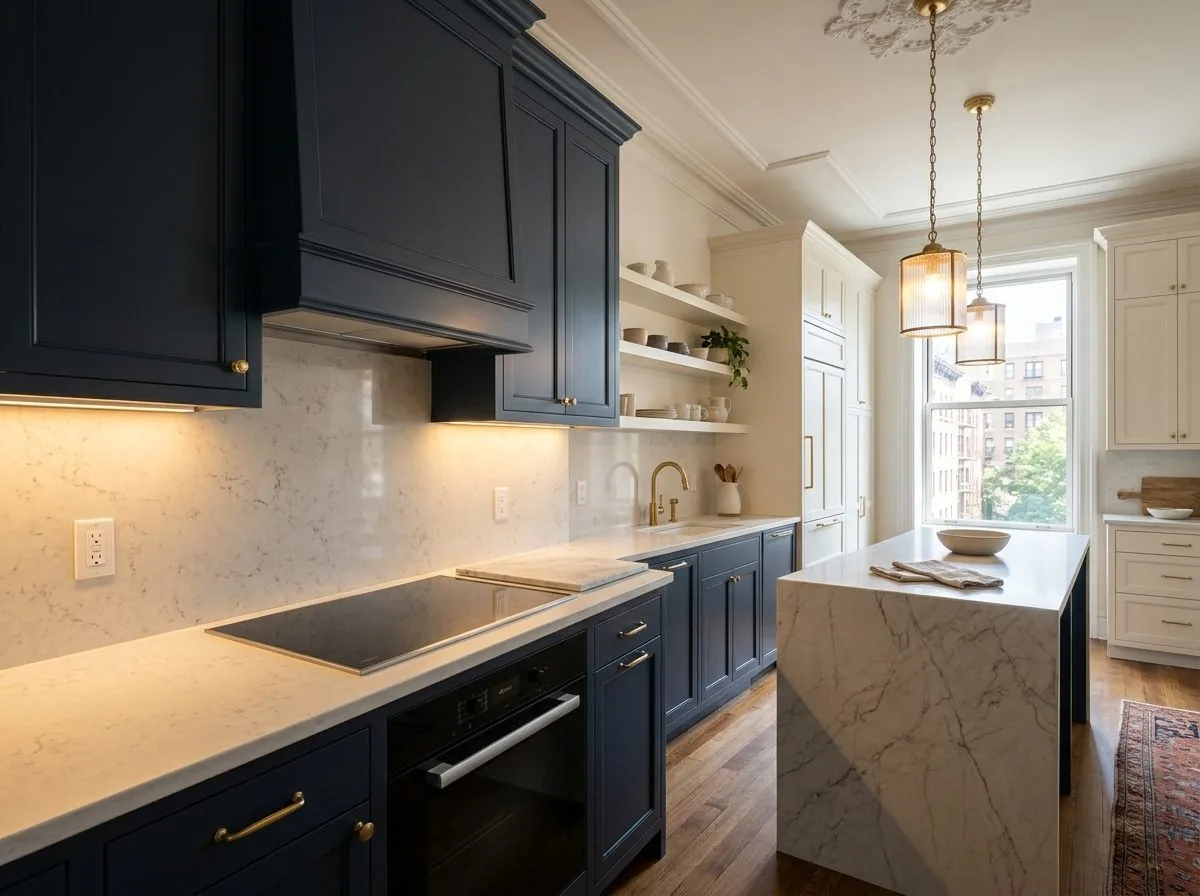
Remodeling a kitchen in an Upper West Side cooperative or condominium is one of the most rewarding upgrades you can make, but it is also the most electrically demanding room in your home. A prewar galley kitchen that ran for eighty years on one shared 15 amp circuit suddenly needs dedicated power for stone countertop outlets, dishwashers, speed ovens, and under cabinet lighting. Planning your electrical layout before ordering appliances prevents costly surprises. This guide is part of our Upper West Side Home Electrical Guide.
The Essential Circuits in a Code Compliant NYC Kitchen
When you open kitchen walls for a renovation, the NYC Department of Buildings requires bringing the room up to current NYC Electrical Code standards. A modern apartment kitchen layout typically includes seven to eight separate branch circuits:
- Two 20 Amp Small Appliance Countertop Circuits: Dedicated exclusively to countertop and island receptacles for coffee makers, toasters, and blenders.
- Refrigerator Circuit: A dedicated 15 amp or 20 amp line so a tripped countertop GFCI never shuts off your food storage.
- Dishwasher and Disposal Circuits: Dedicated lines with accessible disconnect means under the sink.
- Microwave or Speed Oven Circuit: A dedicated 20 amp 120 volt or 208 volt circuit inside the microwave cabinet.
- Range or Induction Cooktop Feeder: A heavy 30 amp to 50 amp 208 volt circuit for electric cooking.
- Kitchen Lighting Circuit: A separate 15 amp circuit for overhead LEDs and hardwired under cabinet task bars so you are never left in the dark if an appliance trips.
Check 208 Volt Building Power Before Ordering Appliances
Here is a technical detail that catches many Manhattan homeowners off guard. Suburban houses receive 120/240 volt single phase power. Almost all multi family apartment buildings on the Upper West Side receive 120/208 volt three phase power from Con Edison.
When a heating element designed only for 240 volts is connected to a 208 volt apartment feeder, its wattage drops by roughly 25 percent. Always check the specification sheet of your wall oven, induction cooktop, or speed oven before purchasing to confirm that the manufacturer rates the unit for 208 volt operation.
Can Your Co-op Apartment Switch From Gas to Induction Cooking?
Many Upper West Side homeowners want to cap their old gas stove line and install a sleek electric induction range. Whether your co-op board approves an induction range comes down to your apartment feeder amperage. If your apartment only has a 40 amp or 50 amp feeder coming up from the basement, adding a standard 40 amp induction range may push your NEC load calculation over the limit.
Before you buy an induction stove, have our licensed electricians perform a load calculation during kitchen and bathroom electrical planning. If your riser is tight, you have three options: upgrading the apartment panel and feeder if the building allows, choosing a 30 amp induction cooktop paired with a 120 volt convection oven, or selecting an induction range with built in power management.
Countertop GFCI Spacing and Island Outlet Rules
The electrical code sets clear rules for where kitchen outlets must sit so appliance cords never have to stretch across a sink or stove. Any countertop section wider than 12 inches needs an outlet, and no point along the wall countertop line can be more than 24 inches from a receptacle. Every countertop outlet must have GFCI protection.
Co-op Alteration Agreements and Wet Over Dry Rules
Most Upper West Side co-ops enforce strict wet over dry rules, which prohibit expanding wet plumbing or dishwashers over a downstairs neighbor bedroom or living room. Your electrical and plumbing drawings must match the approved alteration footprint. We coordinate directly with your general contractor and provide all required load letters and DOB permits through our co-op and condo electrical service.
Planning an Upper West Side Kitchen or Bathroom Renovation?
Our licensed electricians review appliance specs, prepare co-op load letters, pull NYC DOB permits, and wire complete kitchen remodels.
Explore Kitchen and Bathroom Electrical or call PeakPower Upper West Side at (212) 555-0123.
Frequently Asked Question
Kitchen counter appliances like kettles, toasters, espresso machines, and air fryers each draw 10 to 13 amps. Having two separate 20 amp countertop circuits lets you run two heating appliances at the same time without tripping a breaker.
Related Upper West Side Electrical Guides
Upper West Side Home Electrical Guide
Read our complete master guide to apartment electrical systems on the UWS.
Read ArticleWhy Breakers Trip in Old Apartments
See how shared circuits overload when microwaves and air conditioners run.
Read ArticleNYC Electrical Code for Apartment Owners
Learn the NYC rules on GFCI outlets, AFCI breakers, and DOB permits.
Read Article