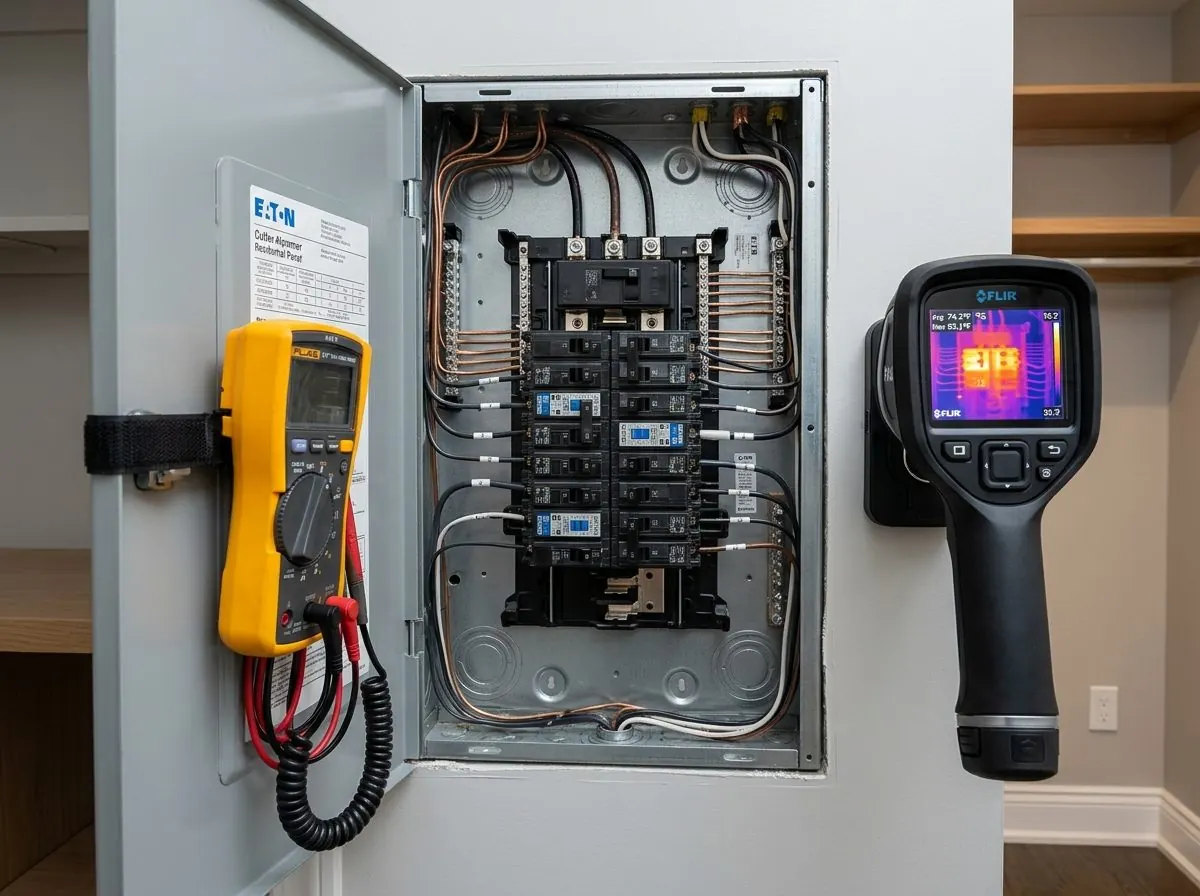
Whether you are replacing two prong outlets, remodeling a prewar kitchen, or clearing an open violation before selling a cooperative apartment, every electrical project in Manhattan is governed by the New York City Electrical Code. Knowing the core rules that apply inside multi family residential buildings helps you plan safe work and pass city and board inspections. This guide is part of our Upper West Side Home Electrical Guide.
How the NYC Electrical Code Differs From National Rules
Most US towns use the National Fire Protection Association code as written. New York City has tall towers and shared brick walls. So the NYC Department of Buildings adds local safety rules.
The most noticeable NYC rule for apartment owners involves wiring materials. In most multi family dwellings in Manhattan, nonmetallic plastic sheathed cable (Romex) is prohibited. All concealed and exposed branch wiring inside apartments must use approved metal clad (MC) cable, armored (AC) cable, or metal conduit so conductors are physically armored inside walls and ceilings.
When an NYC DOB Electrical Permit Is Required
Only a licensed New York City electrical contractor can file for an electrical permit with the Department of Buildings through DOB NOW. Understanding what requires a permit versus minor maintenance saves homeowners from costly stop work orders and co-op board fines:
- Projects Requiring a DOB Permit: You need a permit to swap a panel. You also need one to add new circuits, rewire a kitchen, install an EV charger, or clear a DOB violation.
- Minor Replacement Work: Swapping a light, switch, or outlet on an existing line is minor upkeep. Your co-op board will still ask for insurance papers.
What Is a GFCI Outlet and Where Is It Required?
A Ground Fault Circuit Interrupter (GFCI) is a fast acting safety device with TEST and RESET buttons on the faceplate. It continuously compares the electrical current leaving the hot slot with the current returning on the neutral slot. If even 4 to 6 milliamps of current leaks out through water or a person touching a faulty appliance, the GFCI trips in a fraction of a second to prevent a serious shock.
Under the NYC Electrical Code, GFCI protection is mandatory for all receptacles in bathrooms, kitchen countertops, sinks within six feet, dishwashers, laundry closets, outdoor terraces, and garages. In older Upper West Side apartments that still have ungrounded two wire BX cable in bedrooms, code also allows installing a properly labeled GFCI receptacle to provide shock protection where no equipment ground wire exists. Learn more on our outlet and switch installation page.
AFCI Breakers for Bedrooms and Living Areas
While a GFCI protects people from electrical shock near water, an Arc Fault Circuit Interrupter (AFCI) protects your apartment from electrical fires caused by sparking wires. Loose splices, pinched cords, or cracked insulation create high temperature electrical arcs that may not draw enough amps to trip a standard breaker. An AFCI breaker detects the electronic signature of dangerous arcing and shuts off the circuit immediately. Whenever branch circuits are added or extended during an apartment remodel, AFCI protection is required.
Hardwired Smoke and Carbon Monoxide Detector Rules
When you complete a permitted apartment renovation on the Upper West Side, the city inspector and your building engineer will check your smoke and carbon monoxide alarms. NYC code requires hardwired, interconnected smoke and CO detectors with battery backup located outside sleeping areas and inside bedrooms so that if one alarm senses smoke, all alarms sound together.
Clearing Open Permits and Electrical Violations
During a co-op or brownstone closing, title searches frequently uncover an unclosed electrical permit from a prior owner renovation or an open DOB violation for exposed cellar junction boxes. Our team performs thorough code compliance inspections, corrects any code deficiencies, and obtains the official DOB sign off certificate to clear your property record.
Need a Code Compliance Inspection or GFCI Outlet Upgrade?
Our licensed NYC electricians pull DOB permits, clear violations, and upgrade outlets and panels across the Upper West Side.
Explore Code Compliance Inspections or call PeakPower Upper West Side at (212) 555-0123.
Frequently Asked Question
A GFCI outlet protects people from electrical shock by shutting off power within milliseconds if current leaks toward water or ground. An AFCI breaker sits in your electrical panel and protects your home from electrical fires by detecting dangerous sparking or arcing in damaged wires.
Related Upper West Side Electrical Guides
Upper West Side Home Electrical Guide
Read our complete master guide to apartment electrical systems on the UWS.
Read ArticleOld Wiring in Prewar Apartments
See why NYC requires armored cable and how two wire prewar grounding works.
Read ArticleKitchen Remodel Electrical Guide for NYC Co-ops
Learn the exact circuit and GFCI rules for Manhattan kitchen renovations.
Read Article