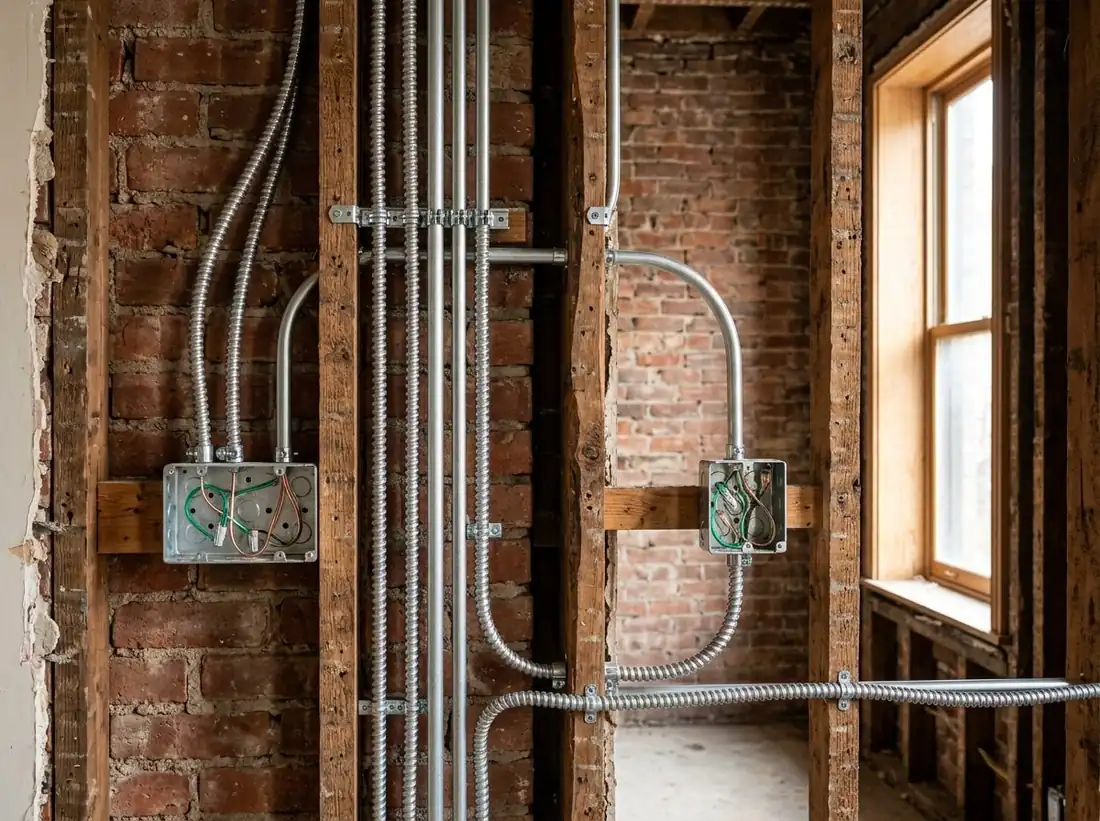
When you buy or renovate a prewar cooperative or brownstone on the Upper West Side, the plaster walls and oak parquet floors look timeless. Inside those walls, however, the branch electrical wiring may be eighty to one hundred years old. Knowing what type of wire sits behind your outlets and ceiling fixtures helps you spot safety issues early. This guide is part of our Upper West Side Home Electrical Guide.
Three Generations of Wiring in Upper West Side Buildings
Manhattan residential buildings constructed between 1885 and 1960 used three distinct wiring methods depending on the decade and building class:
- Knob and Tube Wiring (1885 to 1915): Found primarily in older single family and multi family brownstones on the side streets between Central Park West and Riverside Drive. Single copper wires run separately through ceramic knobs and porcelain tubes inside wood floor joists with no ground wire.
- Cloth Insulated BX Armored Cable (1915 to 1950): The standard wiring in almost every prewar elevator cooperative and walk up apartment on the Upper West Side. Two copper conductors wrapped in vulcanized rubber and braided black cotton cloth sit inside a spiral galvanized steel armor sheath.
- Thermoplastic Armored and Conduit Wiring (1960s to Present): Modern PVC and nylon insulated copper wires with a dedicated copper grounding conductor enclosed inside metal clad armor or steel EMT conduit.
Why Cloth and Rubber Insulation Fails Over Time
Copper wire itself does not wear out from carrying normal household current, but the insulation surrounding the copper degrades steadily with heat and age. In 1920s and 1930s BX cable, the rubber layer beneath the woven cloth jacket dries out and turns hard and brittle.
This aging happens fastest inside overhead ceiling fixture pans. For decades, homeowners burned 60 watt and 100 watt incandescent bulbs in enclosed ceiling globes. That trapped heat baked the wire ends inside the junction box. When someone takes down an old chandelier or bedroom fixture today, the dry rubber and cloth jacket often flakes right off the copper, leaving bare live metal exposed against the steel box.
The Grounding Problem in Two Wire Prewar Circuits
Modern electrical code requires three wires at every outlet: a black hot wire, a white neutral wire, and a green or bare copper equipment ground wire. That third ground wire gives stray electrical current a safe low resistance path back to the breaker panel so a breaker trips immediately if a metal appliance develops an internal short.
Early prewar BX cable contains only two wires (hot and neutral) with no internal copper ground wire. Although the outer steel armor touches the metal outlet box, old spiral steel armor has high electrical resistance and rusted couplings that cannot reliably carry fault current. That is why many unrenovated prewar bedrooms still have two prong outlets or improperly installed three prong outlets with open grounds.
Why Plastic Romex Cable Cannot Be Used in Most NYC Apartments
Homeowners who watch national home improvement shows often expect electricians to pull flat white plastic NM-B cable, commonly called Romex. Under the NYC Department of Buildings electrical code and fire safety rules, nonmetallic plastic cable is prohibited in almost all multi family residential buildings in Manhattan. The National Fire Protection Association and NYC amendments require metal clad (MC) cable, armored (AC) cable with an internal bonding strip, or metal conduit so wires are shielded against nails, rodents, and physical damage inside shared walls.
Full Rewiring vs Targeted Circuit Replacement
Discovering cloth wiring in your apartment does not always mean you have to gut every plaster wall. If you are planning a gut renovation where walls are already opening, full residential rewiring is the smartest long term investment. Every room gets fresh grounded copper circuits, plentiful outlets, and AFCI breaker protection.
If your apartment is occupied and freshly painted, our licensed electricians can perform targeted upgrades. We sleeve brittle fixture leads with high dielectric heat shrink tubing inside ceiling pans, install GFCI protection on ungrounded two wire circuits, and fish new armored cables through hollow baseboards and closets for high draw areas like kitchens, home offices, and air conditioners.
Worried About Aging Cloth Wiring or Two Prong Outlets?
Our licensed Upper West Side electricians inspect prewar junction boxes, test outlet grounding, and rewire apartments and brownstones.
Explore Residential Rewiring Services or call PeakPower Upper West Side at (212) 555-0123.
Frequently Asked Question
Cloth covered wire inside undisturbed metal armor can still function if it is not overloaded, but the rubber insulation inside hot ceiling fixture boxes and heavily used outlet boxes often becomes brittle and cracks. Any box with crumbling insulation or overloaded splices should be repaired or rewired by a licensed electrician.
Related Upper West Side Electrical Guides
Upper West Side Home Electrical Guide
Read our complete overview of Upper West Side apartment electrical systems.
Read ArticleElectrical Panels in Prewar NYC Buildings
See how 60 amp fuse boxes and breaker panels connect to your apartment wiring.
Read ArticleWhy Breakers Trip in Old Apartments
Understand why shared prewar branch circuits trip under modern appliance loads.
Read Article