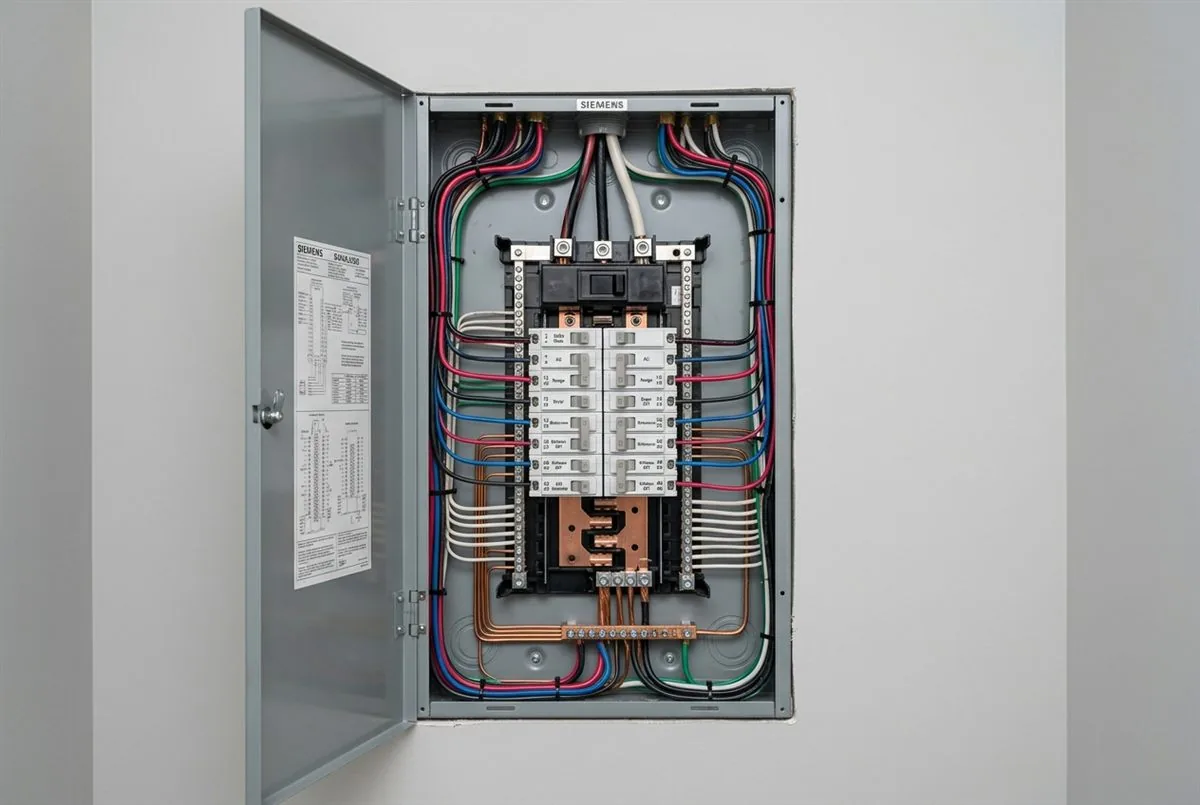
Open the hallway closet door in an Upper West Side apartment built in 1925 and you will see eighty years of electrical history inside one metal box. Some apartments still run on four round glass fuses, others have narrow mid century breaker boxes, and renovated homes feature modern 100 amp load centers. Understanding how your apartment panel works helps you prevent overloads and plan renovations safely. This guide is part of our Upper West Side Home Electrical Guide.
How Apartment Subpanels Connect to the Basement Meter Room
In a suburban single family house, utility wires from the street connect directly to a meter and a 200 amp main panel on an outside wall. In an Upper West Side cooperative or condominium, Con Edison brings high amperage three phase service into a locked basement switchgear room. Inside that cellar room, each apartment has its own electric meter and a main fused disconnect switch.
From that basement disconnect, a heavy feeder cable runs up through the building floors inside steel conduit to your apartment breaker box. Because your apartment box is fed from the basement disconnect, the panel inside your unit is technically a subpanel. Its safe capacity is governed by the wire gauge of that vertical feeder and the fuse rating in the basement.
Typical Amperage Sizes in Upper West Side Buildings
Apartment electrical services on the Upper West Side generally fall into three tiers based on when the building was constructed or last rewired:
- 40 Amp to 60 Amp Prewar Feeders: Common in unrenovated 1910 to 1940 apartments. These feeders usually carry two hot legs of 120 volts or a single 120 volt leg, providing enough power for lighting, a standard refrigerator, and a couple of window air conditioners, but not electric ranges or central air.
- 100 Amp Upgraded Apartment Feeders: Found in buildings that completed a building wide riser upgrade or in larger classic six and seven apartments where a new feeder was pulled from the cellar. A 100 amp 120/208 volt panel comfortably supports a modern kitchen remodel, laundry, and multi room air conditioning.
- 150 Amp to 200 Amp Townhouse and Penthouse Services: Typical in single family brownstones, combined duplexes, and luxury condominiums with central heat pumps and induction cooking.
Fuse Boxes vs Modern Circuit Breaker Panels
Glass screw in Edison fuses and cartridge fuses protect wires by melting an internal metal strip when current exceeds 15 or 20 amps. While a properly sized fuse is safe on its own, fuse boxes create two common problems in older apartments. First, fuse blocks have only four to six branch circuits, forcing homeowners to plug too many appliances into each line. Second, previous occupants sometimes replaced a blown 15 amp fuse with a 20 amp or 30 amp fuse, which allows old 14 gauge cloth wire inside the wall to overheat without blowing the fuse.
Replacing a fuse box with a modern circuit breaker panel restores accurate 15 amp and 20 amp overcurrent protection and lets you reset a tripped circuit with the flip of a switch.
Recalled and Obsolete Panels: Federal Pacific and Zinsco
During the 1950s through the 1970s, thousands of Manhattan apartments upgraded from fuses to early circuit breaker panels made by Federal Pacific Electric (FPE Stab-Lok) or Zinsco. Over time, engineering tests and reports reviewed by the U.S. Consumer Product Safety Commission highlighted that Stab-Lok breakers can jam internally and fail to trip even when carrying double their rated current.
Because a breaker that fails to trip during a short circuit or overload creates a severe fire hazard, home insurance carriers and co-op boards routinely require replacing Federal Pacific and Zinsco boxes during apartment sales or renovations.
When You Need a Panel Replacement vs a Riser Upgrade
Many homeowners assume that replacing a cramped 8 circuit fuse box always requires pulling a brand new feeder cable from the basement ten floors below. In practice, two separate upgrades exist. If your existing basement feeder provides 60 or 100 amps of healthy wire, an electrician can perform an in unit electrical panel upgrade inside your apartment hallway in a single day, giving you 16 to 24 modern breaker spaces for new kitchen and AC circuits.
If you are adding an electric induction range, central ducted air conditioning, and an electric dryer that exceed your existing feeder amperage, your electrician works with your co-op board engineer to evaluate pulling a heavier feeder from the basement switchgear. You can read more about how scope and building rules shape project planning in our guide on what affects the cost of a panel upgrade in NYC.
Need Your Prewar Apartment Panel Inspected or Upgraded?
Our licensed Upper West Side electricians replace fuse boxes and Federal Pacific panels and prepare complete co-op board load calculations.
See Electrical Panel Upgrades or call PeakPower Upper West Side at (212) 555-0123.
Frequently Asked Question
Open the metal door of your breaker box and look at the label on the inside of the door and the breaker handles. Federal Pacific panels are labeled Federal Pacific Electric or FPE Stab-Lok and typically have red or orange stripes across the tips of the breaker switches.
Related Upper West Side Electrical Guides
Upper West Side Home Electrical Guide
Read our complete master guide to apartment power systems and renovations.
Read ArticleWhat Affects the Cost of a Panel Upgrade in NYC
Understand how panel location, riser capacity, and DOB permits shape panel projects.
Read ArticleOld Wiring in Prewar Apartments
See how cloth insulated BX cable and ungrounded outlets pair with older panels.
Read Article