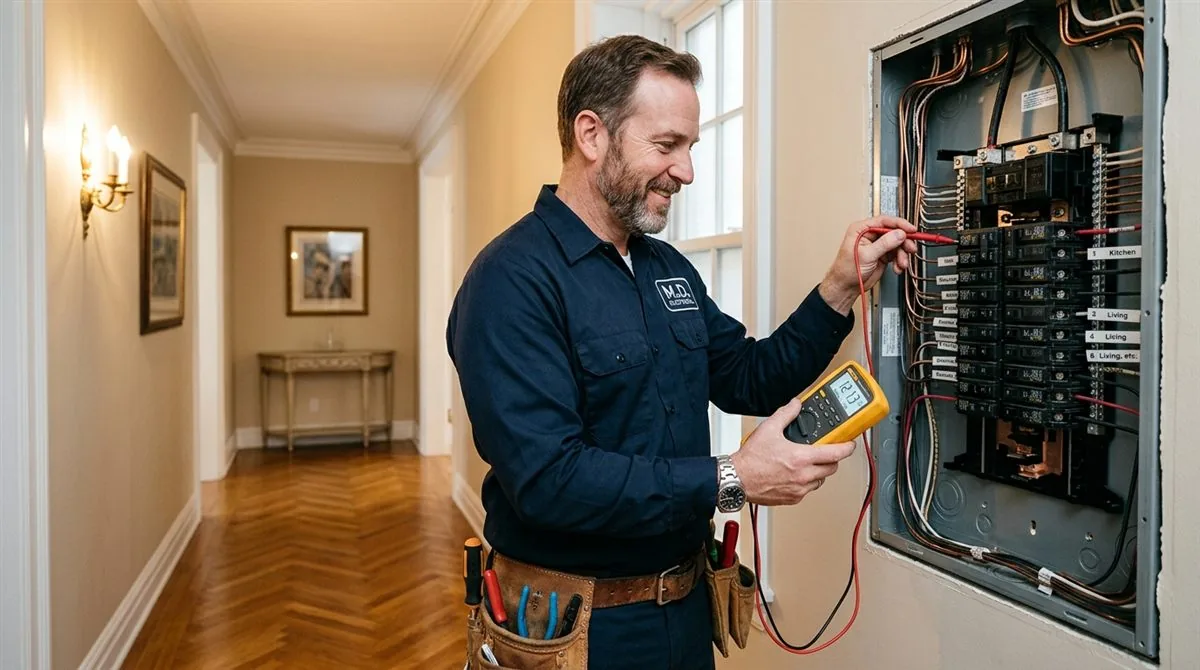
Two Upper West Side homeowners can have very different panel upgrades. One job takes six hours inside an apartment hallway. Another job needs basement riser work, engineering plans, and utility coordination. Understanding the technical factors that drive a panel project in Manhattan helps you know what to expect before an electrician inspects your home. This article is part of our Electrical Panels in Prewar NYC Buildings cluster and our Upper West Side Home Electrical Guide.
Factor 1: In Unit Panel Swap vs Full Riser Upgrade
The biggest variable in any NYC apartment panel project is whether you are replacing the breaker enclosure on your existing feeder cable or pulling a heavier feeder from the basement:
- In Unit Enclosure Replacement: If your existing basement riser already supplies 60 or 100 amps of healthy wire, the electrician shuts off your disconnect in the basement, removes your old fuse box or Federal Pacific panel, and mounts a new 16 to 24 circuit breaker box in the same hallway wall cavity.
- Vertical Feeder Riser Upgrade: Renovating a large unit with central air and an induction stove takes more power. Moving from 60 amps to 100 or 150 amps requires a new heavy copper cable from the basement room up to your floor.
Factor 2: Wall Construction and Panel Relocation
Prewar apartments often have old fuse boxes tucked inside narrow hallway closets, behind kitchen cabinet doors, or recessed into solid masonry and terra cotta block walls. Under current NYC Department of Buildings electrical code rules, a new electrical panel must have clear working space in front of the door and cannot be hidden inside a clothes closet where garments touch the cover.
When a panel must be rotated to face a hallway or recessed into a deeper masonry opening, the electrician splices and extends the existing armored branch cables inside a code compliant junction trough and mounts the new load center at the proper height.
Factor 3: AFCI and GFCI Breaker Requirements
Thirty years ago, a panel swap used simple standard thermal magnetic breakers that cost very little per slot. Today, NYC code requires Arc Fault (AFCI) breakers on bedroom and living room circuits when wires are updated. It also requires Ground Fault (GFCI) protection for kitchen, bath, and laundry lines.
Safety research from the National Fire Protection Association shows that AFCI and GFCI breakers cut down home fires and shocks. These smart breakers make up a big part of modern panel hardware.
Factor 4: Co-op Board Engineering and DOB Permits
Every NYC panel swap needs a permit from the Department of Buildings. A licensed electrician files the permit and books the city sign off. In a co-op or condo, your managing agent also asks for insurance papers. They need a written scope and a load letter for the building engineer.
Factor 5: Brownstone Main Service and Meter Equipment
In a single family or multi family brownstone, the scope looks different from an apartment subpanel. Upgrading a brownstone to 200 amp service involves replacing the main basement service disconnect switch, meter pan, ground rod and water main bonding jumpers, and coordinating the service cutover with Con Edison utility crews.
How to Get an Accurate On Site Assessment
Because no two prewar risers or hallway walls are identical, no honest electrician can guess your exact scope without opening your apartment panel cover and checking your basement meter room disconnect. During our on site visit for electrical panel upgrades, we inspect both ends of your feeder and give you a clear, written scope before any work begins.
Ready for an On Site Panel and Riser Inspection?
Our licensed Upper West Side electricians inspect your apartment panel and basement disconnect and provide a clear written scope.
Explore Electrical Panel Upgrades or call PeakPower Upper West Side at (212) 555-0123.
Frequently Asked Question
The electrical code prohibits installing or maintaining circuit breaker panels inside easily ignitable clothes closets and requires a clear 30 inch wide by 36 inch deep working space in front of the panel door. During a renovation, we often flip the panel to face the hallway wall right outside the closet.
Related Upper West Side Electrical Guides
Electrical Panels in Prewar NYC Buildings
Read our main cluster pillar on fuse boxes, 60 amp risers, and recalled panels.
Read ArticleUpper West Side Home Electrical Guide
Explore our complete master guide to apartment electrical systems on the UWS.
Read ArticleNYC Electrical Code for Apartment Owners
See when NYC DOB permits and AFCI breakers are required in apartments.
Read Article